
On... "Hedda"
Why Is The Public Ignoring The Best Film of 2025 To-Date?

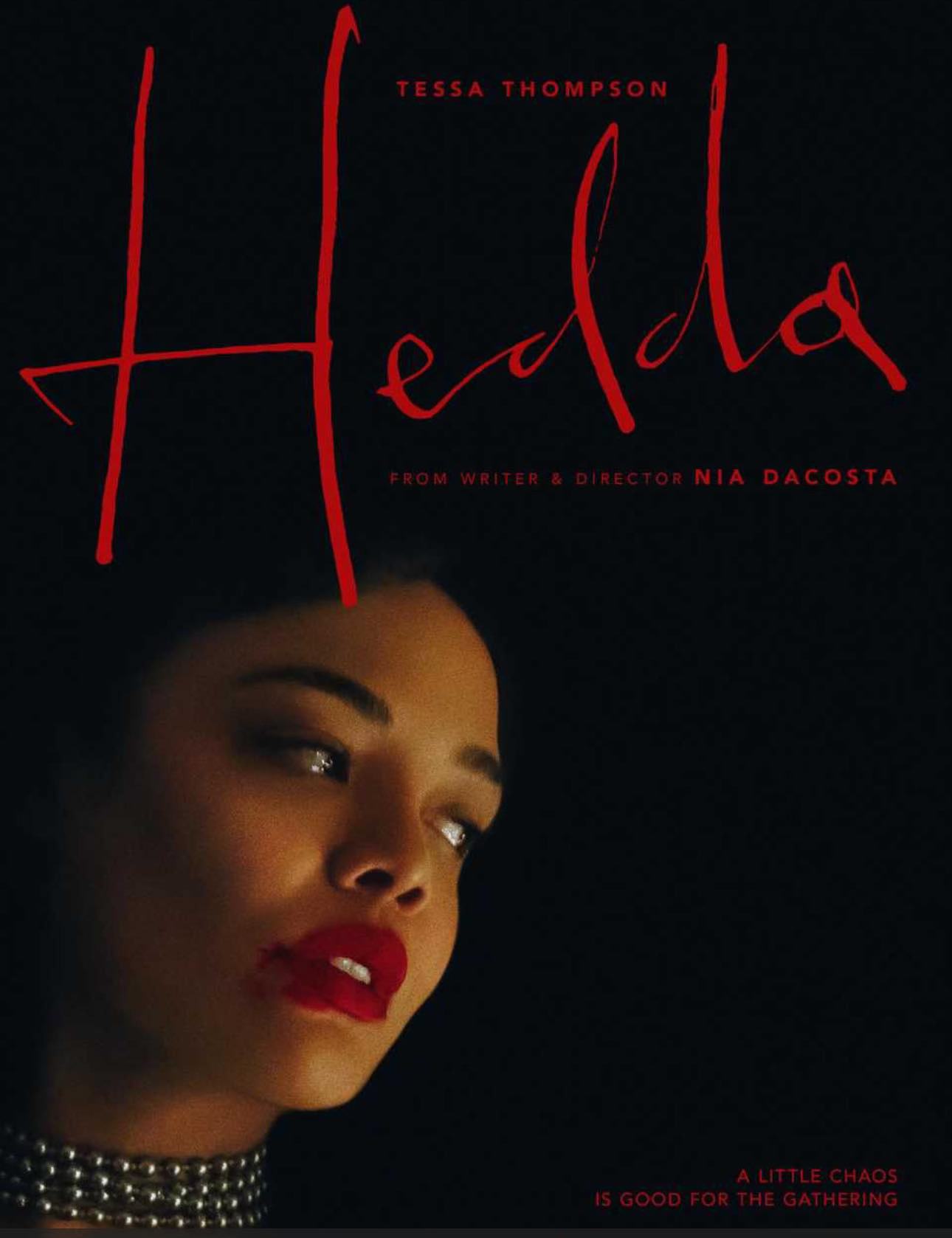
We watched “Hedda” and “Love Brooklyn” (the latter being gowns, beautiful gowns) for Thanksgiving (as well as old “Soul Train” and “Midnight Special” episodes), hands down “Hedda” was the crowd favorite by leaps and bounds. How this isn’t the national conversation as THEE Oscar frontrunner speaks to the racism and sexism going on in the industry and country right now. Bar none “Hedda” is the best film I’ve seen in 2025 thus far that’s not named “Sinners.” Almost all of my Turkey Day guests co-signed this sentiment.
Based on Ibsen’s canon classic 19th Century womanist play, “Hedda Gabler,” writer/director Nia Dacosta reimagines the work as a bisexual triangle…no, really a pentagon of lust, love, passion, jealousy, self-loathing and hatred. Hedda is both a world class schemer and the origin story for misery loves company. A treatise on how the societal boxes confining all women, but especially queer women, Black women, and smart women of the 1950s and early ‘60s can lead to the most perverse and tragic destructions out of femme rage and frustration, Hedda checks every second wave feminist philosohical box without once feeling heavy or didactic.
To the contrary, “Hedda” is shady, campy, quick-witted, and more erudite than a 19th century novel. You can’t take your eyes off of the screen or you’ll miss a knife or screw turn that will shift the plot’s kaleidoscope again and again. The visual storytelling is unrelenting, precise, and sumptuous.
And, that’s before we get to how lush and opulent those visual landscapes all are. Cinematographer Sean Bobbit, set director Stella Fox, and art director Andrew Ackland-Snow collude to deliver the most decadent 20th Century UK party ever filmed that wasn’t an orgy. Costume designer Lindsay Pugh created gowns and suits that each told their own stories and revealed who each character was and evolved into as the evening progressed. The entire crew of “Hedda” brings their A-game and is nomination worthy.
As is the astonishing Tessa Thompson in her best performance since “Passing.” Channeling the ghost of Margo Channing from “All About Eve” and Regina Giddens from “The Little Foxes,” Thompson sports the posh Transatlantic accent that was all the rage during the Golden Age of Hollywood and resurrects the truly complex and layered villainess that hasn’t seen the light of day since Kathleen Turner as the femme fatale in “Body Heat.” Thompson’s every acting beat counts, not a single moment of her screen time is wasted or superfluous (shout out to editor Jacob Schulsinger for making sure the timing of her acting was flawlessly captured throughout), every gesture with Thompson’s Hedda matters, every calculation and expression purposeful. It’s a master class supported by the most glorious lines of Ibsen and Dacosta.
Thompson in her tour de force role has plenty of support by pentagon members Nina Hoss as her husband’s professional rival and her past…lets say “companion,” Imogen Poots as her romantic rival, Nicholas Pinnock as the Addison Dewitt powerhouse who will not be denied, and Tom Bateman as the love lost husband who tried and failed to cage the force of nature that cannot be contained. Each goes toe to toe with Thompson’s Martha (think Albee) of the British elite and walks away limping. It’s all so delicious and rich, that you’ll have to watch it twice to take it all in.
A Black woman director, a Black queer woman lead, and a story fired up by lesbian and bisexual lust, love, and control in an anti-DEI age? I guess I shouldn’t be surprised it’s not on everyone’s lips. But, it should be, because this film is the personification of “they just don’t make them like this anymore.” For their part, critics have sung its praises. Now the rest is up to you.
It was definitely worth the watch. I appreciate the recommendation and the well-articulated review.